
7 Ways to Save on Insurance in 2025
- Jul 22, 2025
- 4 min read
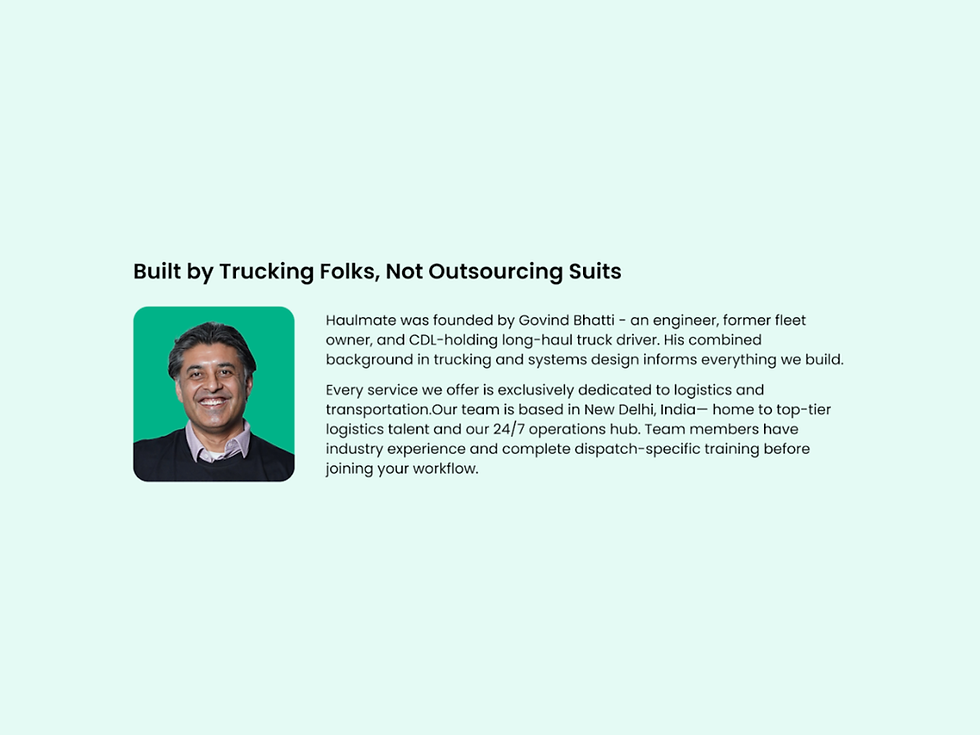
By Govind Bhatti, Founder & CEO of Haulmate
Over-the-road motor carriers and logistics providers continue to battle steep insurance premium hikes, especially in terms of liability and cargo coverage.
According to the American Transportation Research Institute (ATRI) and recent analysis from TruckingInfo.com, premiums are rising due to:
“Nuclear verdicts” in crash-related cases
Mounting litigation costs in general
Escalating cargo theft and claims
Inflation in vehicle repair and parts cost
Rising medical costs
Even as premiums rise, savvy truck operators find relief by implementing operational, strategic, and technology-driven actions that improve safety and mitigate risk.
Here are seven proven ways to cut safety-related insurance costs in today’s market:
1. Invest in Safety Technology — and Leverage the Data
Fleet operations that invest in modern safety systems not only see fewer crashes, they qualify discounts and better underwriting terms from insurance carriers.
Recommended tools:
Forward- and dual-facing dash cameras provide critical evidence in crash litigation and help exonerate drivers
Collision mitigation systems (ADAS) help reduce the frequency of rear-end crashes and lane departure accidents
Real-time telematics and driver monitoring catches risky behaviors like speeding, hard braking, or distracted driving before accidents occur
Electronic stability control and automatic emergency braking systems help prevent rollovers and loss-of-control events
ATRI (American Transportation Institute) data indicates that fleets using video telematics see fewer claims, faster settlements, and reduced litigation exposure
Savings potential: Some insurers offer premium reductions up to 15% for fleets using these tools consistently.
2. Strengthen Driver Hiring and Training Standards
Underwriters scrutinize driver quality for good reason. Poor hiring and lax onboarding can lead directly to increased crash risk and higher claims.
Key actions:
Implement detailed background checks (MVRs and FMCSA PSP scores)
Administer road tests, especially for younger or less experienced drivers
Provide recurring training in defensive driving and cargo securement
Adopt a zero-tolerance policy for DUIs and other safety violations
Leverage accredited driver training programs, like the Smith System that focus on improving driver safety and awareness
Fleets that develop a strong safety culture from day one are more likely to operate safely. incidents.
Savings potential: Better driver quality leads to fewer crashes and that makes for more favorable insurance rates.
3. Implement a Formal Safety Management Program
A documented and active safety program signals to insurers that safety isn’t just talk, it’s serious action in the form of written policies.
Best practices:
Designate a safety director or manager
Monitor crash data and CSA scores monthly
Proactively monitor ELD notifications related to driver behavior
Continuously monitor temperature set point and reefer cycle of temperature-controlled freight
Set KPIs (e.g., preventable accidents per million miles)
Host safety meetings and performance reviews quarterly
Ensure ongoing compliance with FMCSA rules, including for HOS and ELDs
Fleets with robust internal safety programs — and the records to prove it — typically see fewer claims and benefit from lower premium growth over time.
Savings potential: Fleets with lower Unsafe Driving and Crash Indicator CSA scores may be eligible for preferred insurance coverage.
4. Optimize Claims Management and Crash Response
Managing the fallout from crashes is just as important as preventing them in the first place.
Smarter claims management includes:
Establishing a rapid-response protocol (to secure evidence early)
Using legal partners familiar with trucking litigation
Fast-tracking minor settlements to avoid drawn-out cases
Defending against staged or exaggerated claims
Deploying AI tools to help flag unusual or inflated claim costs
These steps limit litigation exposure and help reduce long-term loss ratios, a key factor in pricing.
Savings potential: Carriers with low loss ratios often receive more flexible deductible options or bundled discounts.
Pro Insight: Safer Fleets = Lower Premiums
According to the American Transportation Research Institute, carriers in the top safety performance tier experience 20 to 30% fewer insurance claims and qualify for lower base premiums over time. It has been shown in the industry that fleets that proactively manage driver behavior, crash data, and compliance consistently outperform peers in both claim frequency and cost.
Bottom line: Better operations don’t just prevent accidents — they directly reduce what you pay to insure your fleet.
5. Explore Captives, SIRs, and Deductible Adjustments
For carriers and logistics firms with good safety records and stable finances, shifting how risk is assumed can heighten insurance savings.
Options include:
Raising deductibles from $1,000 to $5,000 plus to lower base premiums
Joining or forming a captive insurance group with peer fleets
Using a self-insured retention (SIR) model to retain predictable risk levels
Note: These approaches require disciplined safety practices, high liquidity, and third-party actuarial support.
Savings potential: For the right fleets, captives can offer long-term cost control and profit-sharing.
6. Monitor and Reduce Cargo Risk
Cargo theft — especially of high-value goods — keeps on spiking in the U.S. and insurers are taking notice.
Prevention tactics:
Install GPS tracking on tractors and trailers
Use geofencing for greater control to avoid high-risk zones
Enforce seal verification and freight inspection protocols
Avoid known high-theft regions when staging freight (e.g., Southern California and Texas)
Park in secure, well-lit areas
Insurers are tightening rules for high-value freight such as electronics and pharmaceuticals. Strong security policies are now a prerequisite for affordable cargo coverage.
Savings potential: Lower cargo claims help keep both liability and cargo premiums in check.
7. All Costs Count — Offset Insurance Hikes with Broader Operational Savings
Rising insurance rates may be unavoidable, but they don’t have to be unmanageable. One of the most effective ways to offset higher coverage costs is by reducing overhead elsewhere in your operation.
A top strategy in 2025: adopt business-process outsourcing (BPO)
As explained in Haulmate’s BPO breakdown, smart outsourcing helps fleets cut costs while scaling dispatching and back-office capabilities.
How BPO can reduce your operating costs:
Eliminate hard-to-fill and retain back-office roles (dispatching, billing, etc.)
Outsource repetitive administrative work and reduce payroll complexity
Free up in-house staff to focus on other key areas, like safety and fleet productivity
Add round-the-clock coverage for scheduling, dispatch, or driver support
By improving efficiency and reducing fixed labor costs, truck operators gain flexibility to absorb higher insurance premiums without eroding margins.
Savings potential: Haulmate says that fleets using BPO for non-core operations report cost reductions of 10 to 30% in administrative staffing overhead.
Wrapping Up
Insurance inflation isn't slowing down. The solution is to layer on safety strategies that are backed by data, operational discipline, and cost-offsetting tactics, like leveraging Haulmate business-process outsourcing.
Let Haulmate help you implement these strategies— by cutting the cost of hiring in-house dispatchers and back-office staffers via BPO.



Comments